
Urban cycling has undergone a quiet transformation in recent years, particularly among commuters who rely on their iPhones for navigation, fitness tracking, and communication. Where cyclists once memorized routes or pulled over frequently to check directions, a growing number now ride with their devices mounted directly to handlebars—a shift that reflects both the increasing sophistication of cycling infrastructure and the expanded role smartphones play in active transportation. The practice has become common enough that bike shops report fielding regular questions about mount compatibility with newer iPhone models, particularly the larger Pro Max variants that dominate the premium segment.
The appeal centers on continuous access to navigation without the safety compromise of handheld device use. Cyclists navigating unfamiliar routes through city grids face a persistent dilemma: checking an iPhone for turn-by-turn directions requires either stopping every few blocks or glancing down at a device held in one hand, neither of which suits the flow of urban traffic. Handlebar mounts position the screen at eye level, allowing riders to track their route with peripheral vision while maintaining focus on the road ahead. For commuters threading through bike lanes during rush hour, this matters considerably more than it would on recreational rides through parks.
The fitness tracking dimension has also contributed to adoption. Apple Health and third-party cycling apps like Strava rely on continuous GPS data to record routes, elevation changes, and performance metrics. Keeping an iPhone in a pocket or backpack during rides works functionally, but limits real-time visibility into metrics like current speed or heart rate when paired with an Apple Watch. Mounting the device transforms it into a cycling computer, displaying data that enthusiasts use to pace themselves on longer rides or monitor exertion levels during interval training. The convenience of glancing at metrics without breaking stride has pulled some users away from dedicated cycling computers back toward their iPhones.

Weather resistance plays an unexpected role in the calculation. Modern iPhones carry IP68 water resistance ratings, which means they can withstand rain exposure that would have destroyed earlier models. Cyclists who previously avoided mounting their phones during uncertain weather now treat their devices as sufficiently ruggedized for light precipitation. This expands the utility window—a commuter no longer needs to decide between mounting their iPhone and checking the forecast, since the device can handle a surprise drizzle encountered mid-route. The shift reflects broader confidence in Apple’s hardware durability claims, which users are increasingly willing to test in real-world conditions.
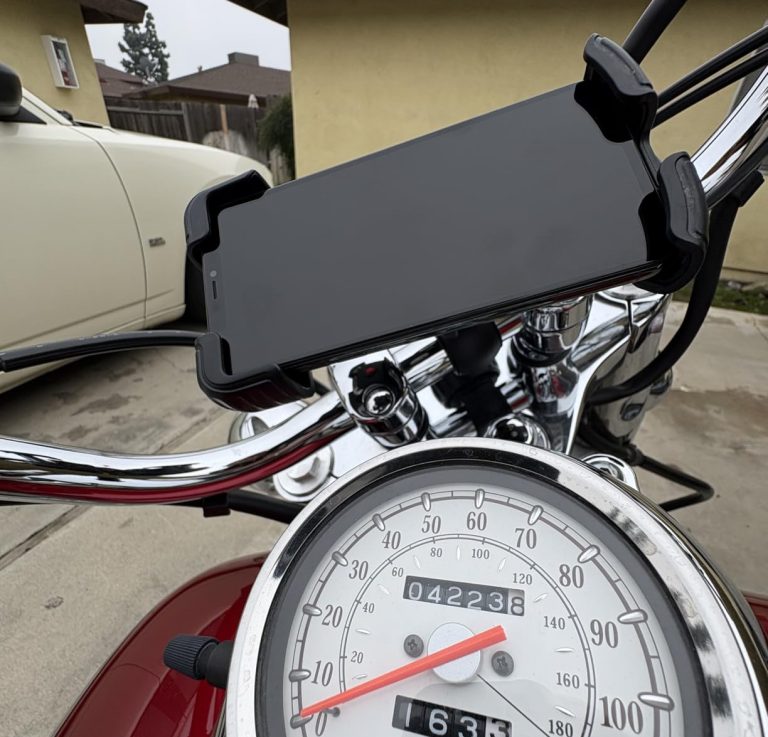
Motorcycle and scooter riders face similar considerations but with higher stakes. Navigation while riding a motorcycle through highway traffic demands even more attention than cycling, and fumbling with a phone stored in a jacket pocket introduces dangerous distraction. Mounting an iPhone to motorcycle handlebars creates a fixed reference point for GPS directions, eliminating the need to pull over at every interchange. For riders who use their bikes for delivery work or rideshare services, this operational efficiency translates directly into time savings—each avoided stop adds up over the course of a shift.
The size evolution of iPhones has complicated the mounting landscape. The jump from 6.1-inch displays to 6.7-inch Pro Max models means mounts designed for earlier generations often can’t accommodate newer devices. Adjustable clamp systems that stretch to fit screens between 4.7 and 6.8 inches address this by using flexible grips that expand and contract, maintaining secure hold across the full range of current iPhone sizes. This matters for households where multiple family members with different iPhone models might share a bike, or for users who upgrade their device but want to continue using the same mount.
Security concerns remain, particularly in cities where bike theft extends to accessories. Riders who mount their iPhones in high-traffic areas report a heightened awareness of their device’s visibility, especially when stopping at red lights or locking bikes outside cafes. Some have adopted habits like removing their phone before dismounting, treating the mount as temporary infrastructure rather than a permanent installation. Others simply accept the visibility as a trade-off for convenience, banking on the impracticality of stealing a phone mid-ride in congested traffic.
Previously listed at a higher price point, the current listing shows $11.99 at the time of publishing. View current listing. Price at time of publishing. Subject to change.
"Note:We may receive a affiliate commission when you purchase products mentioned on our website."