
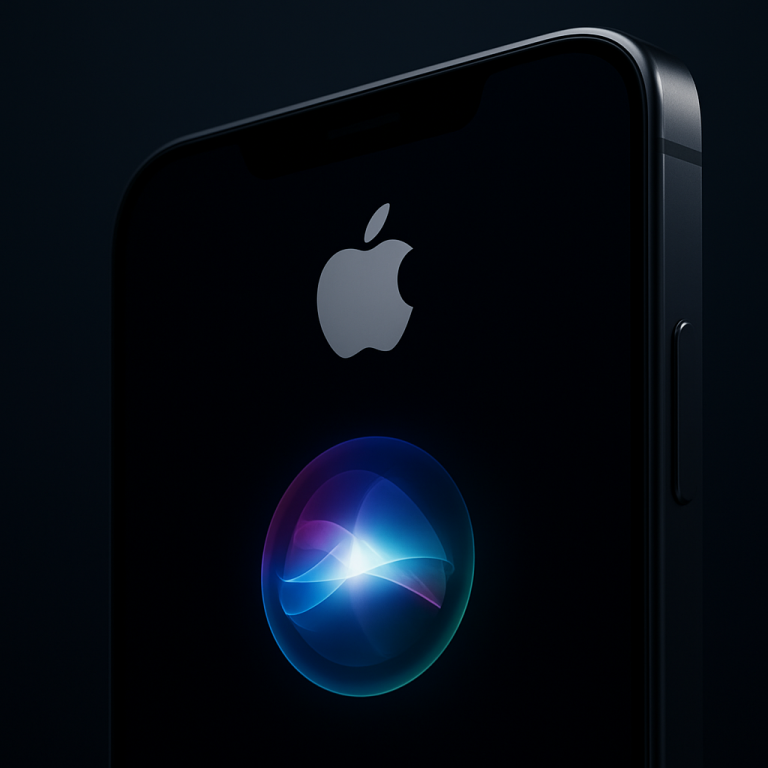
Apple looks poised to unveil a substantial AI overhaul for Siri in iOS 27 at this year’s Worldwide Developers Conference. Recent code references in beta builds and insider reports hint at deeper on-device machine learning, enhanced natural-language understanding, and tighter integration with iPhone, MacBook, Apple Watch, and HomePod. As users increasingly rely on voice commands for everyday tasks, the promise of a smarter Siri raises questions about performance, privacy, and daily workflow shifts.
On a typical morning commute, Marcus reached into his car’s MagSafe dock to unlock his iPhone and tapped Siri to schedule a meeting. He paused to check his battery percentage on the lock screen before asking Siri to summarize overnight emails. That small physical action—glancing at the charge level—underscores how voice interactions are woven into device habits.
In the office, early adopters are testing new Siri prompts on a MacBook Pro. A whispered command on Apple Watch can now hand off to HomePod in the living room, adjusting lights or starting a podcast. This ecosystem hand-over highlights Apple’s focus on continuity: a voice request flows between devices without manual setup, linking Siri’s AI to HomeKit, Calendar, and third-party apps.

Not every interaction feels flawless. Some beta testers report longer response times and occasional misinterpretation of complex requests, especially when ambient noise rises. One user described pausing to adjust their AirPods Pro, fiddling with the stem after Siri misunderstood “find nearby coffeeshops.” That subtle friction point reminds us that advanced AI can introduce new layers of latency.
Behaviorally, people are rethinking when to speak versus when to type. Some prefer dictating text messages in iOS 27’s improved voice-to-text mode, while others switch to manual typing to avoid back-and-forth corrections. This choice reflects a broader adjustment: balancing Siri’s promise of hands-free convenience against the precision of touch input.
Industrywide, Apple’s AI push for Siri follows intensifying competition from Google Assistant’s generative features and Amazon Alexa’s smart-home controls. By embedding on-device inference and privacy protections, Apple aims to differentiate Siri not just by capabilities but by trustworthiness.
Watching Siri’s evolution in iOS 27 offers a window into how voice assistants may integrate into our routines. Small shifts—like waiting a fraction longer for a response or choosing to rephrase a request—signal a transition in user expectations. As Apple refines Siri’s AI, the interaction between human voice and silicon will continue to evolve in ways both subtle and profound.
FAQs
When will iOS 27 and the new Siri features arrive?
Apple is expected to preview iOS 27 and its Siri enhancements at WWDC in June, with a public release likely in September alongside new iPhone models.
How will on-device AI change Siri’s performance?
On-device AI processing can reduce reliance on cloud servers, improving privacy and potentially speeding up common voice tasks, though complex requests may still require cloud support.
Will Siri in iOS 27 require additional permissions?
Siri’s updated features will request access to relevant data—such as Calendar, HomeKit, or third-party apps—as needed, with prompts adhering to Apple’s privacy guidelines.
Can Siri hand off tasks between Apple devices?
Yes. The new Siri update emphasizes cross-device continuity, allowing a command started on Apple Watch to complete on HomePod, iPhone, or MacBook without manual pairing.
VERDICT
Apple’s anticipated AI overhaul of Siri in iOS 27 represents a measured step toward more capable on-device assistants. Early beta feedback highlights both promising continuity across iPhone, MacBook, Apple Watch, and HomePod, and subtle latency challenges when processing complex requests. The shift invites users to recalibrate reliance on voice interactions and underscores Apple’s balancing act between advanced AI features and the precision of traditional inputs. Ultimately, this refinement of Siri may quietly reshape daily digital habits.
"Note:We may receive a affiliate commission when you purchase products mentioned on our website."